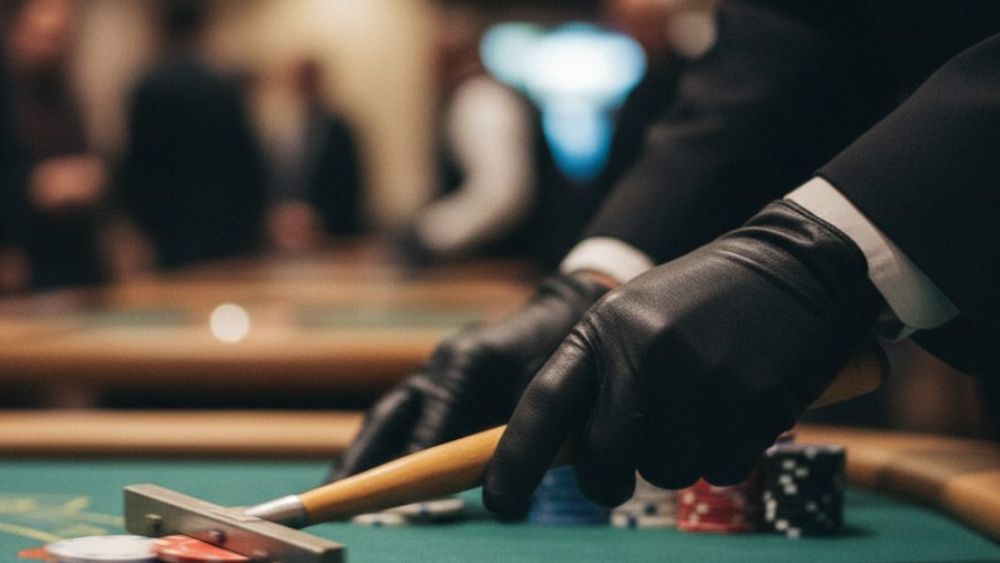
Why Baccarat Feels Complicated (And Why It Really Isn't)
Walk into any casino floor in Manila — Solaire, Okada, City of Dreams, Newport — and the baccarat tables are almost always the busiest. There is a reason for that. Baccarat has some of the lowest house edges of any table game in the building, and the rules take about five minutes to learn. The intimidation factor comes from the furniture, not the math.
Most new players from Metro Manila and Cebu get introduced to baccarat through a friend who already plays, or through the live dealer lobbies of local-facing online casinos. Both routes tend to skip the basics. You get told to "just bet Banker" without anyone explaining why, or you get handed a scorecard and told to look for patterns that were never there.
This guide strips it back. No dragon betting systems, no wild martingale fantasies. Just the fundamentals that actually affect whether you leave the table with money.
The Three Bets You Need to Understand
Baccarat gives you exactly three wagers. Everything else — side bets, dragon bonuses, pair wagers — is an add-on with a worse price.
Player
You are betting that the player hand finishes closer to 9. It wins roughly 44.6 percent of hands. Payout is even money, no commission. Sounds clean, and it is, but you are paying for that simplicity with a slightly higher house edge.
Banker
You are betting on the banker hand. It wins about 45.9 percent of hands, which is why casinos take a 5 percent commission on Banker wins. The commission is what makes this the sharpest bet on the table — roughly a 1.06 percent house edge, compared to about 1.24 percent on Player.
New players hate the commission because it makes payouts look messy. A ₱1,000 Banker bet returns ₱950 in profit. Get over that quickly. If you avoid Banker purely because of the commission, you are voluntarily choosing the worse bet.
Tie
The Tie pays 8-to-1 and looks tempting every single time the board shows two ties in a row. Ignore it. The house edge sits around 14 percent, sometimes higher depending on the table's payout structure. It is the worst bet on the layout and it is not close.
A simple rule: if a bet pays a big multiple on a baccarat table, the casino is charging you heavily for the privilege.
Reading the Scorecard Without Falling for Patterns
The beaded scorecard — the grid of red and blue circles that gets updated every hand — is the single biggest source of bad baccarat decisions among Filipino players. It is a record of what happened, not a prediction of what comes next.
Each hand in baccarat is dealt from a fresh shoe of shuffled cards. The outcome is independent. Three Banker wins in a row does not make a Player win "due." Six Players in a row does not signal a streak you should chase with doubled stakes.
That said, the scorecard is not useless. Here is how experienced players actually use it:
- Tracking, not forecasting. Some players follow the last result (betting Banker after Banker) and some bet against it. Neither approach changes the odds. Both are valid ways to decide where to place chips so you are not frozen at the table.
- Pacing. A long shoe takes time. Watching the board lets you slow down, which is genuinely useful if you tend to bet too fast and too big.
- Spotting side-bet traps. The areas around the main grid — Dragon 7, Panda 8, Player Pair, Banker Pair — are where the house edge quietly jumps. The scorecard shows how often those hit, which is less often than the payouts suggest.
If you catch yourself saying "the shoe feels due for a Tie," step away from the table for a few minutes. That instinct is exactly what the Tie bet is priced to exploit.
Money Management That Survives a Bad Shoe
Strategy talk is meaningless without bankroll discipline. Baccarat sessions are volatile because hands resolve in seconds. You can play 60 hands in half an hour and barely notice the time pass.
A workable setup for a typical session at a mid-tier Manila table:
- Decide your session bankroll before you sit down. Cash you can lose without it affecting rent, tuition, or groceries. Treating a baccarat session as an investment is how players get hurt.
- Set a unit size of 1 to 2 percent of that bankroll. If you bring ₱20,000, your base bet sits around ₱200 to ₱400. That gives you enough hands to actually play, instead of busting on a rough ten-hand stretch.
- Pick Banker or Player and stay there for the session. Flip-flopping based on gut feeling adds noise, not edge.
- Cap your losses and your wins. A common approach is a stop-loss at 50 percent of the bankroll and a stop-win at 50 to 100 percent. When either hits, you are done. No exceptions.
- Skip the progressive systems. Martingale and its variants assume unlimited bankroll and no table limit. Baccarat tables in Philippine casinos have maximums precisely because those systems fail.
Live dealer platforms add a practical wrinkle: the speed. Online dealers move faster than a physical table, sometimes 40 to 60 hands per hour. If you are playing online from home, the bet-sizing discipline matters even more because there is no walk to the bar to break the rhythm.
What Good Baccarat Strategy Actually Looks Like
There is no system that beats baccarat, and any site selling you one for a fee is selling you fiction. What you can control is your exposure.
The realistic version of "good strategy" at a baccarat table comes down to four things: bet Banker more often than Player, never touch the Tie, keep unit sizes small relative to your bankroll, and stop when you hit your limit. Everything else — following streaks, cutting patterns, alternating on gut feel — is entertainment dressed up as technique.
That is not a defeatist position. It is why baccarat remains one of the better-value table games in Philippine casinos. A 1.06 percent house edge means a patient player with a ₱10,000 bankroll making ₱200 Banker bets loses, on average, about ₱2 per hand over the long run. That is a cheap few hours of entertainment, provided you keep the bets flat and the session short.
Where players get destroyed is not the game's math. It is the escalation — doubling after losses, chasing a Tie to "recover," or dipping into money that was never meant for the table. Fix the habits and baccarat becomes exactly what it should be: a slow, low-edge game you can walk away from without damage.
Start small at your local casino or a licensed online lobby, get comfortable with the commission, and let the scorecard stay what it is — a record of the past, not a promise about the future.
Frequently Asked Questions
Is Banker always the better bet than Player in baccarat?
Yes, mathematically. Banker wins slightly more often and, even after the 5 percent commission, carries a lower house edge (around 1.06 percent versus roughly 1.24 percent on Player). The difference is small, but over hundreds of hands it matters.
Should I ever bet on Tie?
No. The 8-to-1 payout looks generous, but the house edge is around 14 percent or higher — roughly ten times worse than a Banker bet. Ties are rare enough that the payout never compensates for the frequency.
Does the scorecard help me predict the next hand?
It does not. Each hand is dealt from a shuffled shoe, so results are independent. The scorecard is a record of what already happened. Use it for pacing and tracking, not forecasting.
How much should I bet per hand in baccarat?
A common guideline is 1 to 2 percent of your session bankroll per hand. If you bring ₱20,000, base bets of ₱200 to ₱400 give you enough hands to play through normal variance without busting early.